
Resign or remove a director without legal risk.
Whether a director is resigning or being removed by shareholders, the process must follow Companies Act 2013 procedures precisely — including DIR-11, DIR-12, and where applicable, special notice and shareholders' resolution.
Pricing
Pricing tailored to your specific requirements
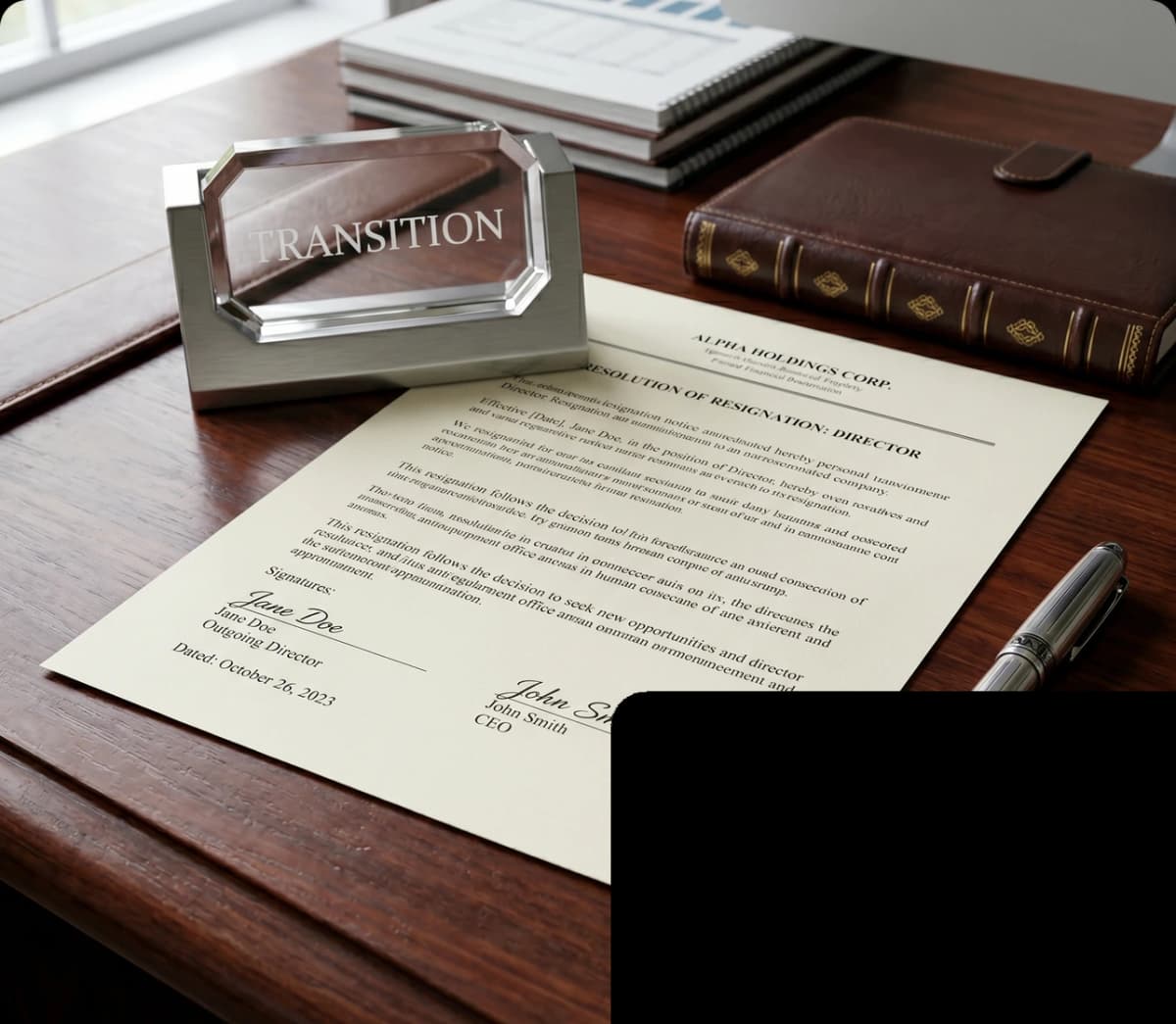
Director Change Filed in 3 Days*
*Timeline is indicative and may vary based on document verification and government processing.

Resignation vs. Removal of a Director
A director may leave a company in two ways: voluntary resignation or removal by shareholders. Under Section 168 of the Companies Act, 2013, a director can resign by giving written notice to the company. The resignation takes effect from the date specified in the notice or when the company receives it — whichever is later. The resigning director must file Form DIR-11 (intimation to ROC) within 30 days, and the company must file Form DIR-12 within 30 days of receiving the resignation notice. Under Section 169, a company can remove a director before expiry of their term by passing an ordinary resolution (simple majority) at a General Meeting — provided the director is not appointed by the Central Government or by a tribunal. A special notice of 28 days must be given before the meeting, and the director must be given an opportunity to be heard.
Resignation vs. Removal — Key Differences
| Aspect | Resignation | Removal |
|---|---|---|
| Initiated by | Director (voluntary — written notice to company) | Shareholders (by ordinary resolution at General Meeting) |
| Governing section | Section 168, Companies Act 2013 | Section 169, Companies Act 2013 |
| Notice period | As per AoA or notice given (immediate if no AoA provision) | Special notice of 28 days required before General Meeting |
| Director's right | Can resign at any time — no shareholder approval needed | Director has right to make written representation to be sent to all members |
| Forms required | DIR-11 (by director) + DIR-12 (by company) | DIR-12 (by company) after passing ordinary resolution |
Our Process
Confirm minimum director requirement is still met post-exit (2 for Pvt Ltd, 3 for Public)
Resignation: Director drafts and submits written resignation notice to the company
Resignation: File Form DIR-11 on MCA by the resigning director within 30 days
Company files Form DIR-12 on MCA within 30 days of receiving resignation
Removal: Shareholders issue 28-day special notice specifying intent to remove
Company sends removal notice to the director — director may submit written representation
Convene EGM/General Meeting — pass ordinary resolution for removal
File Form DIR-12 within 30 days of passing the resolution
Update Register of Directors and issue updated director list
How It Works
Share Your Details
Fill a short form or call us. We collect your requirements and all documents online — no physical visit needed.
Expert Assignment
A dedicated specialist with expertise in your service category is assigned to your case within 24 hours of payment.
Work in Progress
Your expert prepares documents, files applications with the relevant authority, and follows up on your behalf.
Delivery
Your registration certificate, legal document, or filed return is delivered digitally to your Golden Verdict dashboard.

Get Your Director Removed Without Any Hassle
Resignation letter drafting, DIR-11 and DIR-12 filing, board/EGM resolution drafting, shareholder notice, and MCA statutory register updates.
Pricing
Custom Quote
Pricing tailored to your specific requirements
Get Your Director Removed Without Any Hassle
Resignation letter drafting, DIR-11 and DIR-12 filing, board/EGM resolution drafting, shareholder notice, and MCA statutory register updates.
Pricing
Custom Quote
Pricing tailored to your specific requirements


Why Golden Verdict For
Resignation / Removal of Director?
Director exit disputes — particularly in co-founder situations — can create prolonged MCA compliance gaps if not handled correctly. A resigning director who fails to file DIR-11 remains on MCA records as a director, creating personal liability exposure. Golden Verdict drafts resignation letters, ensures DIR-11 is filed by the resigning director's side, handles the company's DIR-12 filing, and in removal cases drafts the special notice, board resolution, and shareholders' resolution in full compliance with Section 169. We also update the company's statutory Register of Directors and ensure the company continues to meet minimum director requirements after the exit.
A director exit that isn't filed is an exit that doesn't exist in law. Golden Verdict closes the loop completely.

Frequently Asked Questions
What is the difference between DIR-11 and DIR-12?+
Can a director resign if they are the only director?+
What is the removal procedure under Section 169?+
Can a director be removed by the Board?+
What happens if DIR-12 is not filed after a resignation?+
Ready to get your Resignation / Removal of Director?
Whether a director is resigning or being removed by shareholders, the process must follow Companies Act 2013 procedures precisely — including DIR-11, DIR-12, and where applicable, special notice and shareholders' resolution.
“A director exit that isn't filed is an exit that doesn't exist in law. Golden Verdict closes the loop completely.”
Built for Indian founders, CFOs, and operators.