
Release your property share with a Relinquishment Deed.
A Relinquishment Deed allows a co-owner or legal heir to voluntarily give up their share in a jointly owned or inherited property in favour of other co-owners. It is the legally correct instrument for restructuring family property ownership — simpler and cheaper than a Sale Deed.
Starting at Just

Deed Drafted in 2–3 Days*
*Timeline is indicative and may vary based on document verification and government processing.

What is a Relinquishment Deed?
A Relinquishment Deed (also called a Deed of Release or Deed of Surrender) is a legal instrument by which a co-owner or legal heir voluntarily waives and releases their share, right, or interest in a jointly owned or inherited immovable property in favour of one or more of the other co-owners. It is commonly used in the following situations: a legal heir waiving their inherited share in the family property in favour of siblings or parents; a co-owner releasing their undivided share to the other co-owner (commonly between spouses); or dissolution of a jointly acquired property arrangement without a monetary transaction. Under the Transfer of Property Act, 1882 and the Registration Act, 1908, a Relinquishment Deed involving immovable property must be registered at the Sub-Registrar's office to be valid. Stamp duty is lower than a Sale Deed and varies by state — typically a nominal fixed amount or 1–2% of the market value, depending on whether the relinquishment is between relatives or strangers.
Common Relinquishment Scenarios
Inheritance — Legal Heir Waiver:
One or more legal heirs (children, siblings) voluntarily waiving their inherited share in a deceased parent's property in favour of another heir — consolidating ownership without a court partition suit.
Spousal Co-Ownership Release:
One spouse releasing their co-ownership share to the other — commonly executed when one spouse wishes to hold the property solely, or upon divorce settlement.
Joint Property Dissolution:
Co-owners of jointly purchased property (friends, business partners) where one party wishes to exit — releasing their share to the remaining co-owner.
HUF Property Restructuring:
A member of a Hindu Undivided Family (HUF) releasing their coparcenary interest in HUF property — separating their share from the joint family estate.
Relinquishment Deed Process
Confirm the share to be relinquished — undivided percentage or specific demarcated portion
Verify title documents — existing title deed, legal heir certificate (for inherited property), or purchase deed
Determine if consideration is being paid — affects stamp duty calculation
Stamp duty calculation — based on state schedule and relationship between parties
Relinquishment Deed drafted — property description, relinquishing party's share, beneficiary details, consideration (if any)
Stamp paper procurement and deed execution — signed by relinquishing party, accepting party, and two witnesses
Sub-Registrar registration — both parties present with original documents and ID proof
Registered deed collected — certified copy with Sub-Registrar endorsement
Mutation application — revenue records updated to reflect the new ownership position
How It Works
Share Your Details
Fill a short form or call us. We collect your requirements and all documents online — no physical visit needed.
Expert Assignment
A dedicated specialist with expertise in your service category is assigned to your case within 24 hours of payment.
Work in Progress
Your expert prepares documents, files applications with the relevant authority, and follows up on your behalf.
Delivery
Your registration certificate, legal document, or filed return is delivered digitally to your Golden Verdict dashboard.
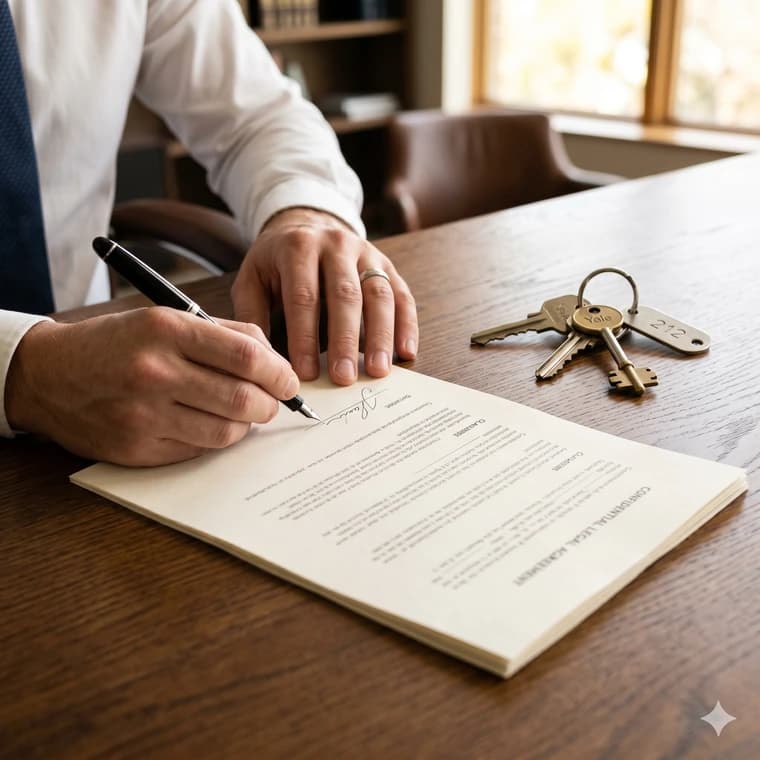
Get Your Share Released Without Any Hassle
Relinquishment of co-ownership shares in inherited or jointly acquired property — with stamp duty calculation, sub-registrar registration, and post-registration mutation advice.
Starting at Just
Get Your Share Released Without Any Hassle
Relinquishment of co-ownership shares in inherited or jointly acquired property — with stamp duty calculation, sub-registrar registration, and post-registration mutation advice.
Starting at Just


Why Golden Verdict For
Relinquishment Deed?
A Relinquishment Deed must accurately identify the relinquishing party's share (undivided share percentage or specific portion), the property description, the beneficiary (the party receiving the released share), and whether any consideration is being paid. If consideration is paid, stamp duty is calculated on the consideration amount and the deed may be treated more like a Sale Deed. If no consideration is paid (a gift between relatives), lower stamp duty rates may apply in some states. Golden Verdict drafts Relinquishment Deeds that are legally precise, stamped correctly, and registration-ready — with post-registration mutation advice.
Releasing a property share cleanly prevents disputes for generations. Golden Verdict ensures yours is done right.

Frequently Asked Questions
When is a Relinquishment Deed used instead of a Sale Deed?+
Can a Relinquishment Deed be revoked?+
What is the stamp duty on a Relinquishment Deed?+
Is registration of a Relinquishment Deed mandatory?+
What happens after the Relinquishment Deed is registered?+
Ready to get your Relinquishment Deed?
A Relinquishment Deed allows a co-owner or legal heir to voluntarily give up their share in a jointly owned or inherited property in favour of other co-owners. It is the legally correct instrument for restructuring family property ownership — simpler and cheaper than a Sale Deed.
“Releasing a property share cleanly prevents disputes for generations. Golden Verdict ensures yours is done right.”
Built for Indian founders, CFOs, and operators.